
White County Sex Offender Checks
The Arkansas Sex Offender Registry is the main public channel for a White County sex offender lookup. The Arkansas Crime Information Center, or ACIC, manages the statewide system. Searchers can start with a name or use a place-based field to see publishable records around White County. The map and profile tools answer different questions. A name search helps distinguish one person from another, while an address, city, ZIP, county, or place search supports awareness near a home, school route, or family gathering point.
The White County Sheriff's Department handles the county contact side of registration. Its office can address local registration and suspected noncompliance, but the research found no separate county list with broader public detail than the state registry. For that reason, begin online with ACIC. Call the sheriff when the issue concerns local reporting, a record that appears out of date, or conduct that may breach registration duties. Never assume that no map result means no registration duty exists. ACIC publishes only records eligible for public display.
White County Registration Contact
Local questions go to the White County Sheriff's Department at 1600 East Booth, Suite 100, Searcy, Arkansas 72143. The office number is 501-279-6279. The county sheriff page links residents to the state registry, which keeps the public search in one official system. No official White County source in the research stated appointment hours, a registration fee, or a local verification schedule. Call before visiting instead of relying on an assumed check-in day or process.
White County Sheriff's Department
1600 East Booth, Suite 100
Searcy, AR 72143
Phone: 501-279-6279
Local registration and compliance questions; public profiles remain in the ACIC registry.
This division of labor matters. ACIC maintains the public-facing Arkansas Sex Offender Notification System, while the sheriff serves as the local contact for White County registration matters. A reader who finds an apparent address conflict should save the profile details, note the date checked, and contact the sheriff. Do not confront the registrant or household.
Arkansas Registry Searches
Use the official search fields that match the question being asked. A White County filter gives the countywide view, while address or place searches can focus the map. Names help when the person is already known. Results represent publishable offenders and should be matched with more than one visible identifier before drawing a conclusion.
- Open the ACIC registry and review its conditions of use.
- Enter a name, address, city, county, ZIP code, or place.
- Review the map or list and compare profile identifiers carefully.
- Open the profile to read the level, offense, address, and status fields.
| Search field | Type | Required | Use |
|---|---|---|---|
| Name | Text | No | Find a publishable offender by name. |
| Address | Text/map | No | Display publishable records near the entered address. |
| City | Text or selection | No | Limit the search to a city such as Searcy. |
| County | Selection or text | No | Select White County for a countywide view. |
| ZIP code | Text | No | Focus on one postal area. |
| Place | Text | No | Search around a named Arkansas place. |
| Map/list controls | Map or list | No | Move between geographic and record views. |
The manifest capture from the Arkansas Sex Offender Notification System shows the actual public search entry point.
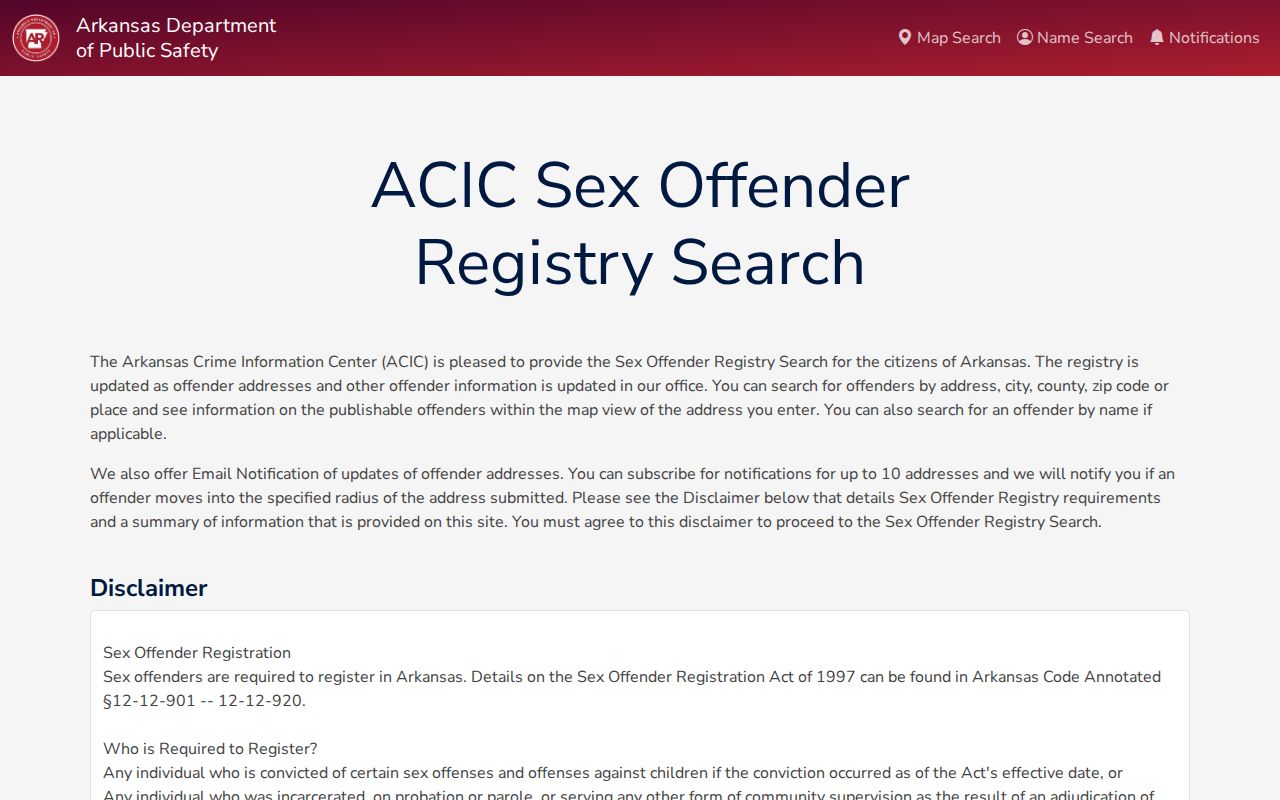
Its range of fields makes it useful for both known-name checks and White County neighborhood awareness.
White County Registry Versus ARCH
ARCH and the public registry are not interchangeable. A paid ARCH name search can state whether a subject is registered or required to register, including a Level 1 through Level 4 status. It does not provide the registry's geographic map or full public profile. ARCH is also a name-based Arkansas criminal-history product, not a fingerprint confirmation. The registry is the stronger source when the question concerns a public address, physical identifiers, listed offense, compliance status, or community map.
This distinction can prevent a common error. A brief ARCH flag should lead to the ACIC registry, not be treated as a complete profile. Conversely, a person absent from the public map should not be declared free of all registration duties. The research notes a category for people required to register but not yet assessed, and public display depends on ACIC rules. Use each result only for the facts it actually reports.
Publishable White County Offender Records
The ACIC search describes its results as publishable offenders. That word sets an important boundary. The public map is not a roll of every person whose record has ever involved a sex offense, and it does not promise that every registration record has the same visible fields. Assessment level, governing law, current status, and ACIC publication rules can shape what appears. A required-to-register flag in ARCH may therefore exist without the same detail a searcher expected from a mapped profile.
When no profile appears, test ordinary search issues before reaching a conclusion. Check the spelling, try an alias, widen a Searcy search to White County, and use the address or ZIP option. NSOPW can test the cross-state layer. If a specific local fact still seems wrong, ask ACIC or the White County sheriff to review it. Their nonpublic records can resolve questions that a public result cannot.
Registry Profiles: What They Show
A public profile supplies identifiers that help separate people with similar names. Some fields vary by the record and ACIC's publication rules. Compare the name, alias, photograph, physical description, and mapped location as a set. An offense label describes the registration basis shown in the profile. It does not invite guesses about conduct not listed there.
| Name and aliases | Published identity and alternate names. |
|---|---|
| Photo and description | Image plus sex, race, height, weight, hair, eyes, and age or date information when displayed. |
| Mapped location | Residence and possible work or school fields when public. |
| Offense information | Description, statute, conviction jurisdiction, or date when displayed. |
| Assessment level | Level 1 through 4, or required-to-register status. |
| Registration status | Compliance or related status and verification information when available. |
| Other identifiers | Vehicles, scars, marks, tattoos, employer, or school data when published. |
Registry records can change as an address, status, assessment, or public field changes. Record the check date and confirm any point that affects a safety plan with ACIC or the White County sheriff.
White County and National Results
A White County search is only one geographic layer. The National Sex Offender Public Website, or NSOPW, combines participating public registries for cross-state searching. It is useful when someone may have moved, uses an out-of-state address, or cannot be found through the expected Arkansas route. Return to the source jurisdiction's profile for the most direct public record and current instructions.
The manifest image from NSOPW shows the national public search layer.
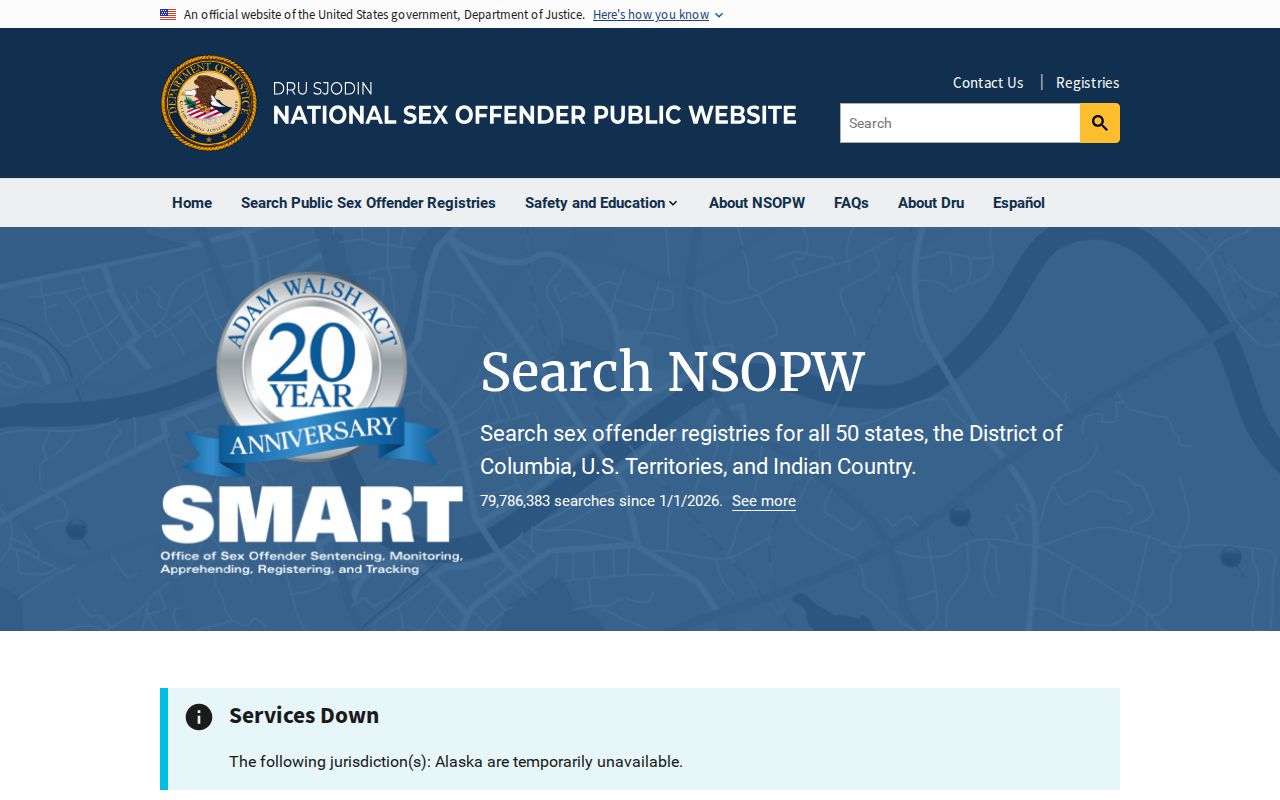
Use it to widen the geographic scope, then verify White County details through Arkansas ACIC and the sheriff.
The FBI Crime Data Explorer serves a different purpose from either registry.
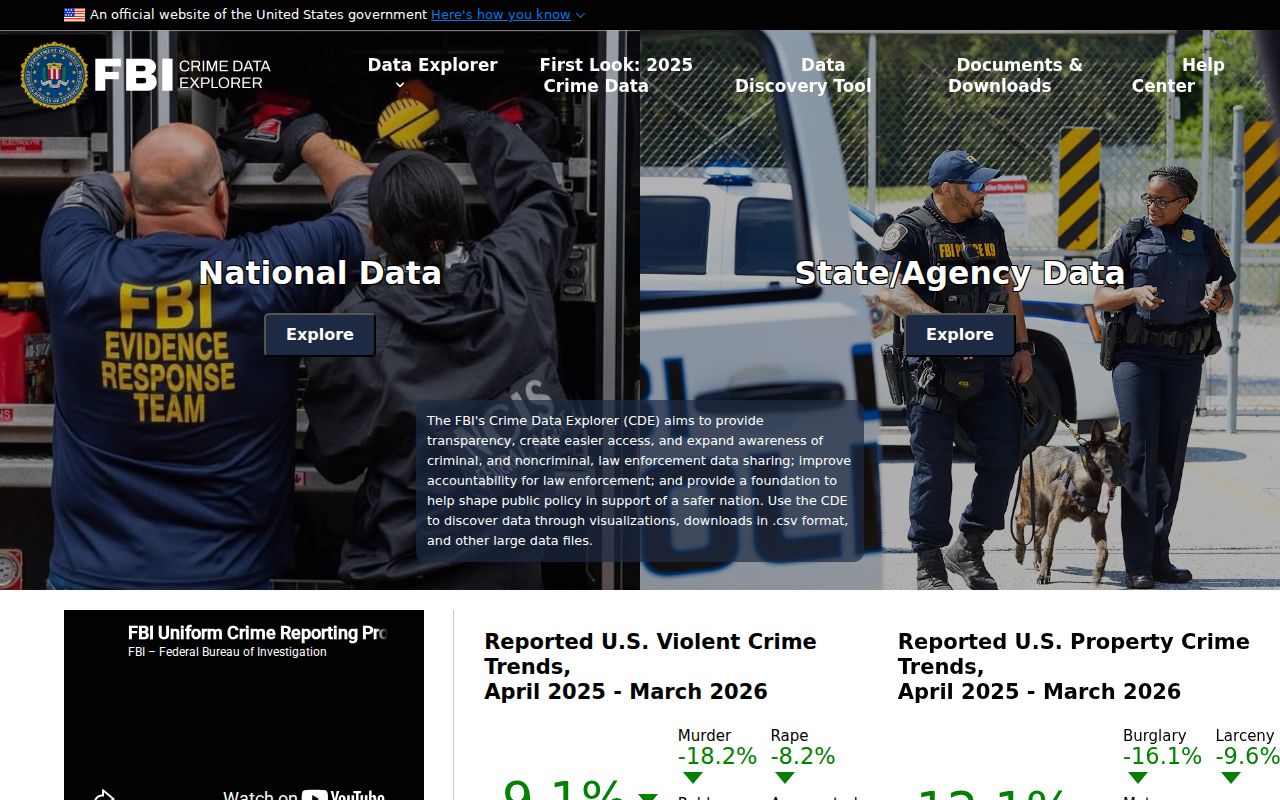
It provides crime-data context, not a White County offender profile or a substitute registry search.
Registration Levels and Duties in Arkansas
Arkansas uses assessment Levels 1 through 4, plus a required-to-register status for a person not yet assessed. These labels concern assessed risk and public notification. The research did not document one universal duration or verification interval for every White County registrant. Those duties can depend on the governing offense and status. Confirm an individual's current requirements with ACIC or the local registration office instead of assigning a schedule from the level alone.
| Arkansas level or status | Public meaning | Duration and verification |
|---|---|---|
| Level 1 | Lower assessed risk; public visibility may be more limited. | Confirm from the profile and registration office. |
| Level 2 | Moderate assessed risk when publishable. | Depends on governing registration duties. |
| Level 3 | Higher assessed risk with greater notification emphasis. | Confirm current duty with ACIC or sheriff. |
| Level 4 | Sexually dangerous person or highest assessment level. | Confirm current duty with ACIC or sheriff. |
| Not yet assessed | Required to register, with assessment pending. | Public display depends on ACIC rules. |
Report White County Noncompliance
If a public profile appears to show a false address or other compliance concern, gather only what can be observed lawfully. Note the profile, location, date, and reason for concern. Contact the White County Sheriff's Department at 501-279-6279 or ACIC at 501-682-2222. ACIC also lists fax 501-683-5592 for its registry contact. Emergency threats still belong with emergency services.
Reporting is not enforcement. Do not follow, contact, photograph at close range, post accusations, or try to test whether a person complies. Those acts can put others at risk and can turn an uncertain observation into harassment. The sheriff and ACIC can compare the report with nonpublic registration records and decide what action is warranted.
Using Registry Information Lawfully
The Arkansas registry exists for public safety and community awareness. Use verified details to make calm choices about personal and family safety. Keep the profile's date and source in view, since a move or correction may make saved information stale. Arkansas's Sex Offender Registration Act of 1997, Ark. Code Ann. §§ 12-12-901 through 12-12-920, governs registration, assessment, notification, and related duties.
Misuse warning: Do not use registry information to harass, threaten, intimidate, or commit a crime against a registrant or family under Arkansas sex offender law.
Publication is not permission for vigilantism. When a result raises a valid concern, use ACIC, the White County sheriff, or emergency services as the situation calls for. Official channels can check a claimed mismatch and act without exposing a household to rumor or retaliation.